
Taiwan Association Inc. Philippines holds leadership turnover ceremony, highlighting stronger Taiwan-Philippines partnership
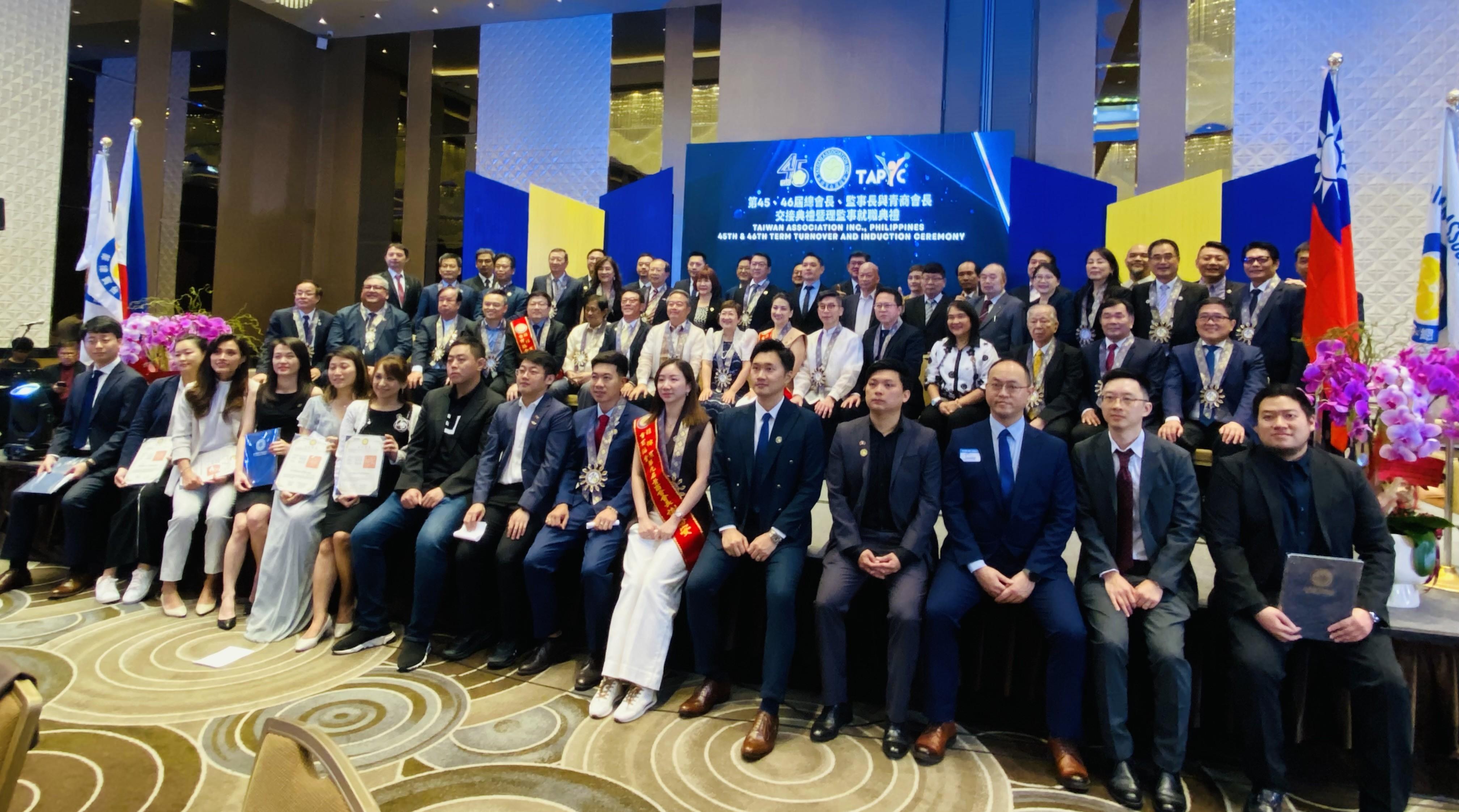
The Taiwan Association Inc. Philippines (TAP) held its 45th-46th Presidential and Supervisory Board turnover ceremony on January 18 in Manila, marking a significant milestone for the organization and underscoring the continued deepening of Taiwan-Philippines relations.
Ms. Jia Hsieh, a second-generation Taiwanese business leader, formally assumed office as President of TAP, receiving the association’s official seal from outgoing President Tom Lin. The ceremony was officiated by Taiwan’s Representative to the Philippines, Ambassador Wallace M.G. Chow, and national policy advisor to the President Kai-min Lin, and witnessed by Minister Chia-ching Hsu of Taiwan’s Overseas Community Affairs Council (OCAC), reflecting the Taiwanese government’s strong support for overseas business communities.
In her inaugural address, Hsieh announced that her two-year term would center on the “Taiwan Link” initiative, which aims to strengthen connections among Taiwanese businesspeople in the Philippines, promote generational succession, and encourage greater youth participation. She emphasized that Taiwan Link is designed to expand professional networks, enhance mutual support, and inject new momentum into TAP.
Ahead of the ceremony, Hsieh launched the Taiwan Link initiative through an interactive networking session that facilitated direct engagement among participants. The activity helped Taiwanese entrepreneurs traveling from various Asian countries connect with locally based Taiwanese business leaders in the Philippines, exchange contacts, and explore potential areas of cooperation.
The event drew a distinguished audience from both Taiwan and the Philippines. From Taiwan, attendees included three legislators — Chih-wei Chiu, Chia-pin Chung, and Mong-kai Hung — demonstrating strong legislative support for overseas Taiwanese affairs. Senior officials from the Taipei Economic and Cultural Office in the Philippines were also present, along with representatives from Taiwanese business associations across Asia, many of whom traveled specifically to Manila to attend the ceremony.
Philippine participants included cabinet officials, members of Congress, and senior representatives from the business sector, including the Philippine Chamber of Commerce and Industry. Their presence highlighted the growing importance of Taiwan-Philippines economic cooperation and people-to-people exchanges.
In his remarks, Ambassador Wallace M.G. Chow noted that the past year had seen steady progress in Taiwan-Philippines relations, with tangible achievements in trade, investment, and bilateral cooperation. He praised TAP for its long-standing role as a vital bridge between Taiwan and the Philippines, not only in economic engagement but also in cultural and community interaction, and expressed confidence that the new leadership would continue to expand bilateral opportunities.
Minister Chia-ching Hsu described the leadership transition as a historic moment for TAP, noting that the appointment of a second-generation Taiwanese leader symbolized successful generational succession within the overseas Taiwanese business community. On behalf of the Taiwanese government, she thanked overseas Taiwanese entrepreneurs for their long-term contributions to economic development and public diplomacy, particularly during times of global uncertainty.
Hsieh also reaffirmed TAP’s commitment to supporting Taiwan-Philippines economic cooperation, including alignment with regional development initiatives such as the Luzon Economic Corridor. She stated that TAP stands ready to serve as a reliable partner for both governments and businesses, providing on-the-ground support for Taiwanese enterprises interested in investing or expanding in the Philippines.
Founded nearly five decades ago, TAP now features a leadership team largely under the age of 50, signaling renewed vitality and adaptability. Hsieh concluded by emphasizing that her administration would deepen engagement with Filipino communities, promote cross-sector and cross-generational collaboration, and ensure that TAP continues to thrive as a forward-looking platform for cooperation between Taiwan and the Philippines.
###
