
Taiwanese food brings Taiwan, Philippines closer at three-day Manila culinary event
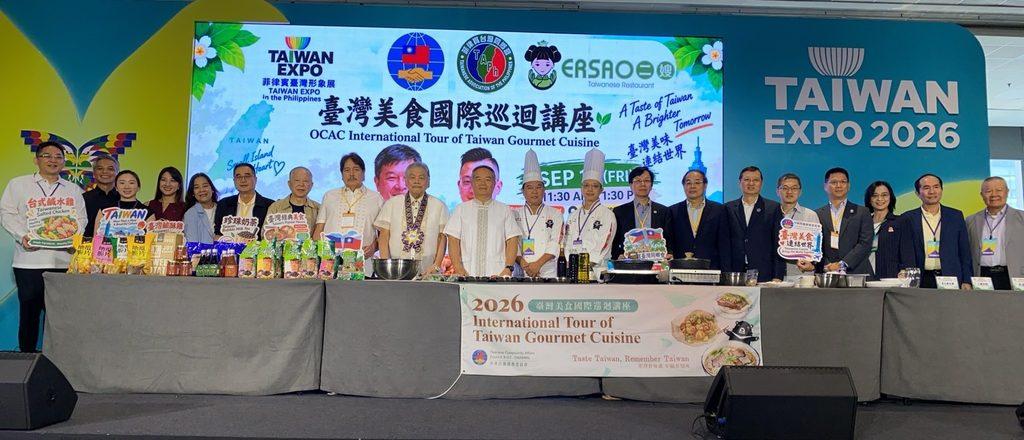
From Philippine-grown vegetables transformed into Taiwanese dishes to a Filipino student speaking Mandarin while taking on the 18-fold Xiaolongbao challenge, a three-day culinary program in Manila brought Taiwanese food and culture closer to Filipino audiences.
The Overseas Community Affairs Council’s (OCAC) 2026 International Tour of Taiwan Gourmet Cuisine was held from September 17 to 19 during the Taiwan Expo in the Philippines at the SMX Convention Center Manila.
Organized by the Taiwanese Association of the Philippines, the program featured Taiwanese chef Kuo-chih Wen and assistant chef Jui-chang Chen, who prepared a wide range of Taiwanese favorites through live cooking demonstrations and food tastings.
More than 350 people joined the main cooking and tasting activities on September 18 and 19, while the opening program on September 17 highlighted Taiwan-Philippines agricultural cooperation through a special farm-to-table presentation.
From Farm to Table
The first cooking demonstration partnered with the Taiwan Technical Mission in the Philippines and featured vegetables grown locally with Taiwanese agricultural support, including okra, cucumber, bitter melon, tomato, cabbage and spring onions.
Using the fresh produce, Wen prepared Taiwanese salted chicken and garden salad, showing how Philippine-grown ingredients could be incorporated into Taiwanese cuisine.
Taiwan Deputy Minister of Economic Affairs(MOEA) Chin-Tsang Ho, Representative Wallace Minn-Gan Chow of the Taipei Economic and Cultural Office in the Philippines (TECO), Manila Economic and Cultural Office (MECO) directors Norman Q. Villanueva and Wilson U. Tecson, and Taiwan External Trade Development Council (TAITRA) Chairman James C. F. Huang were among the guests who attended the opening program.
Chow said the Taiwan Technical Mission has worked with Filipino farmers and local partners for many years, sharing agricultural technology and experience suited to local conditions.
He noted that bringing locally grown vegetables into Taiwanese dishes allowed people to experience the results of Taiwan-Philippines cooperation in a very direct way — from farm to table.
Villanueva welcomed the initiative, saying Taiwan and the Philippines have many opportunities for cooperation in agriculture, trade and culture. Combining Philippine produce with Taiwanese cuisine, he said, also gives Filipinos another way to discover Taiwan.
A Taste of Taiwan in Manila
The program moved to the Taiwan Expo main stage on September 18, where more than 150 visitors watched the chefs prepare Taiwanese salted chicken, pan-fried dumplings, Taiwanese thick pork soup and winter melon tea.
The event was held with the support of ERSAO Taiwanese Restaurant, an OCAC “i Compatriot Card” partner establishment in the Philippines.
Chow said food is one of the most enjoyable ways to discover a country and its culture, noting that Taiwan’s diverse cuisine reflects its history, creativity and different cultural influences.
Tecson likewise highlighted the ability of food to bring people together, saying that tasting a dish can also lead people to discover the culture and stories behind it.
Popular Filipino food content creator The Chui Show also joined the program to experience and feature Taiwanese cuisine for his online audience, helping introduce Taiwanese food culture to more Filipinos through social media.
Visitors sampled the freshly prepared dishes, interacted with the chefs and completed an online survey about their experience. Taiwan-themed temporary tattoos were also distributed to participants.
Filipino Student Takes on Xiaolongbao Challenge
The three-day program concluded on September 19 with some of Taiwan’s most internationally recognizable dishes — Taiwanese popcorn chicken, beef noodle soup, xiaolongbao and bubble milk tea.
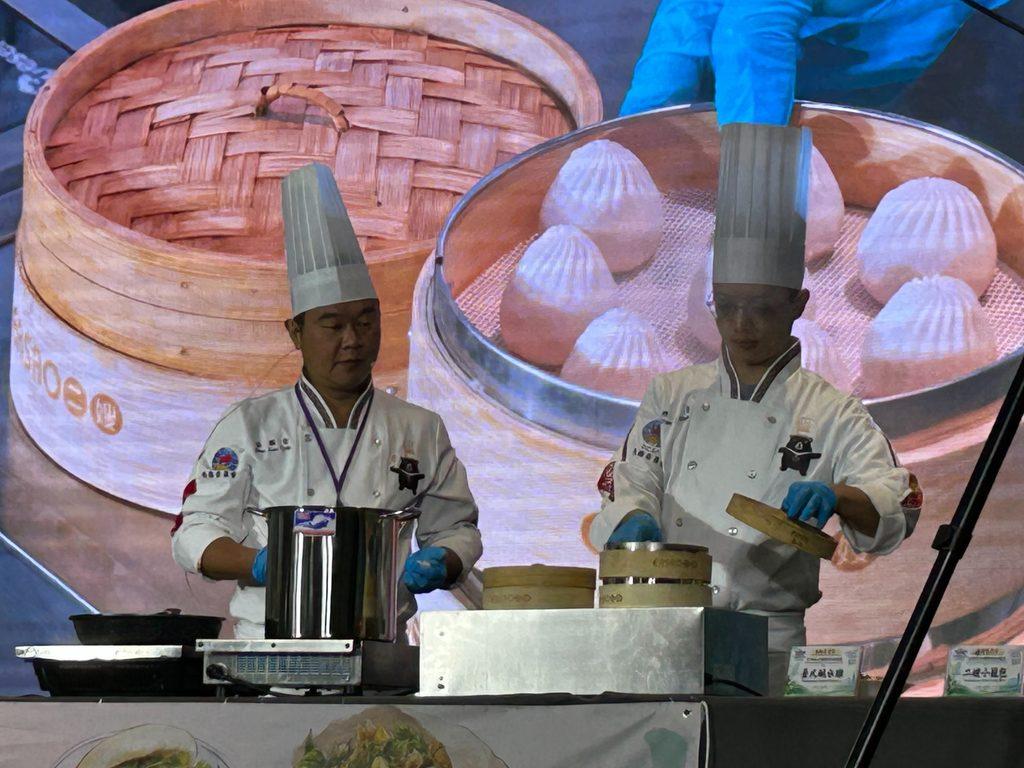
More than 200 people joined the final cooking demonstration and food tasting.
The program opened with a lively performance by the ERSAO mascot before Wen and Chen introduced the ingredients, cooking techniques and stories behind each dish.
The Xiaolongbao demonstration became one of the highlights as Filipino participants were invited onstage to make the popular soup dumplings and attempt the traditional 18 folds.
Among them was a Filipino Grade 12 student who introduced himself in Mandarin and shared his interest in Taiwan and learning the language.
He said he hopes to continue improving his Mandarin and plans to apply to a university in Taiwan after graduating from senior high school next year.
The student said that tasting Taiwanese food and learning to make Xiaolongbao gave him another opportunity to experience Taiwanese culture and strengthened his interest in studying in Taiwan.
Other Filipino visitors also shared their impressions after tasting freshly prepared popcorn chicken, beef noodle soup, Xiaolongbao and bubble milk tea, with several saying the live demonstrations encouraged them to learn more about Taiwan and its food culture.
Food as a Bridge
Representatives of Taiwanese community and business organizations in the Philippines attended the three-day program, including the Taiwanese Association of the Philippines, Taiwan Association, Inc, Taiwanese Chamber of the South Philippines, Taiwan Chamber of Commerce and Industry in the Philippines, and Fil-chi Cultural & Economic Association. The Culture Center of T.E.C.O. in the Philippines, Manila Taiwan Trade Center and Taiwan Technical Mission also participated in the activities.
Through agriculture, cooking demonstrations, food tasting and direct interaction with Filipino visitors, the three-day program presented Taiwanese cuisine not only as food, but also as a platform for cultural and people-to-people exchanges.
From Philippine farms to Taiwanese kitchens — and from a bowl of beef noodles to a student carefully folding his first xiaolongbao — the event showed how food can provide a simple and personal way for people in Taiwan and the Philippines to better understand each other.
###
