
Anti-nuclear movement renews intergenerational fight on 40th Anniversary of the 1985 Welgang Bayan against the Bataan Nuclear Power Plant
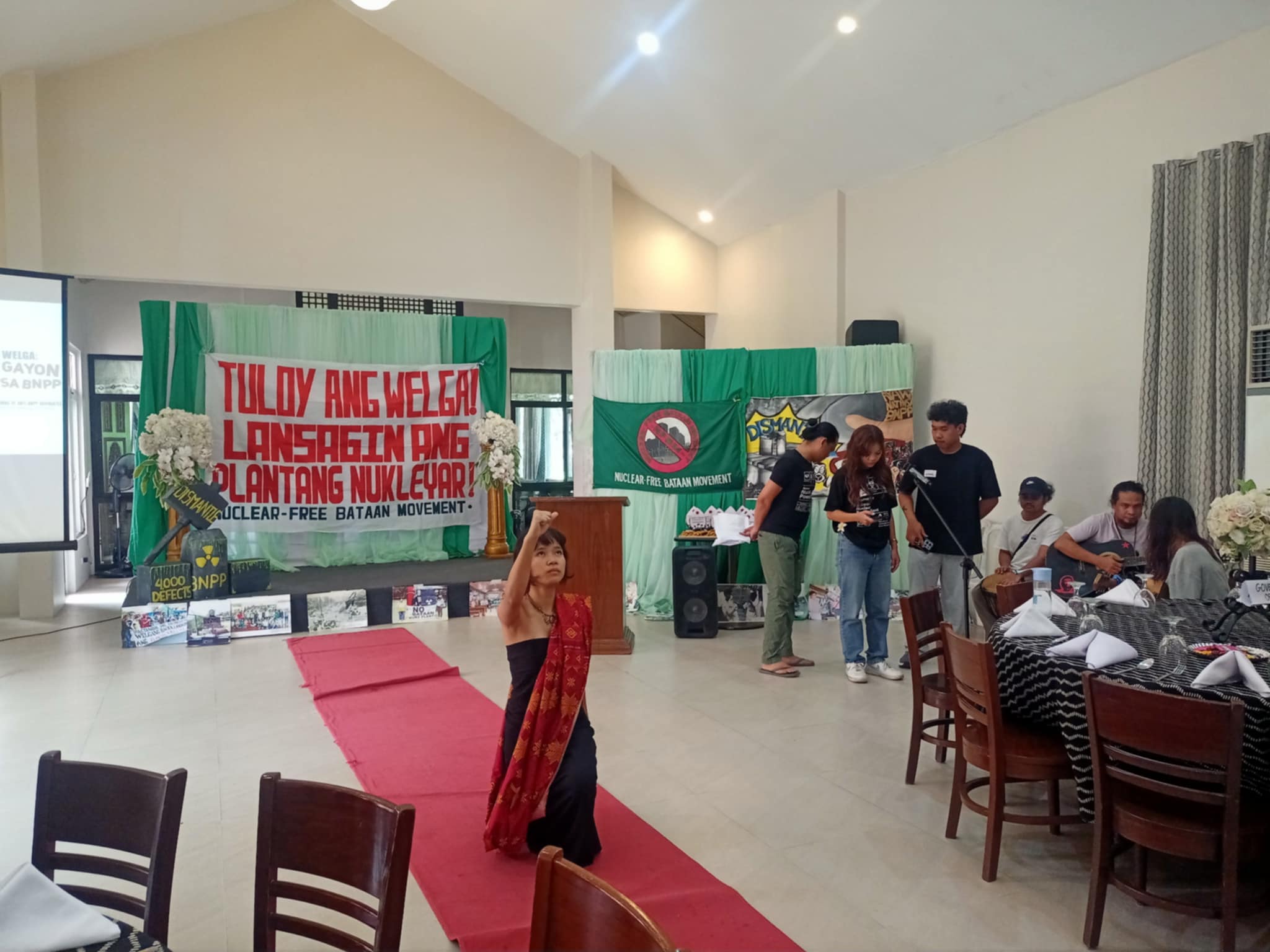
Scores of veteran advocates, Bataan community members, youth leaders, and environmental justice allies forming the anti -Bataan Nuclear Power Plant Movement gathered today in Balanga to commemorate the 40th Anniversary of the Historic Welga ng Bayan Laban sa Plantang Nukleyar of 1985 (People’s Strike Against BNPP 1985).
Four decades later, the battle against the threat of nuclear energy has deeply become intergenerational, with both veteran advocates and a new generation of youth activists reaffirming their commitment to oppose the plant’s revival, which local advocates and allies consider to be an expensive and dangerous distraction against a just transition to renewable energy.


The commemoration serves as a reminder of the collective power that halted the BNPP’s operation in the 1980s and the enduring importance of vigilance and public participation in energy policy decisions. The gathering of both veteran and young advocates in Balanga City highlights a continuing legacy of resistance, rooted in the lessons of the past and a shared commitment to a safe and sustainable future for Bataan and the Philippines.
Recent developments in the Philippine government nuclear talks with international entities such as Korea Hydro & Nuclear Power include new feasibility studies about rehabilitating the BNPP and integrating nuclear energy into the national power mix 2030 onwards. These developments are still fast-tracked despite several studies by reputable local and foreign scientists consistently raising serious safety concerns regarding the BNPP. These studies documented significant issues, including structural defects, seismic risks due to the plant’s proximity to an active fault line, and inadequate safety measures. Their findings have long served as a strong basis for opposition, emphasizing the potential hazards the BNPP poses to public health and safety.
“It is alarming that the current administration is still considering the revival of the Bataan Nuclear Power Plant, despite it being mothballed in 1986. Our reasons for opposing it four decades ago stand today: it is unsafe and costly, and the people of Bataan will bear the brunt at the frontlines” Atty. Dante Ilaya, a veteran anti-BNPP advocate since the 80’s and Chairperson of the Nuclear-Free Bataan Movement (NFBM), said. “The people of Bataan, and the clean energy future Filipinos deserve, should not be an afterthought.”
The Marcos-era Puno Commission, established specifically to investigate the BNPP, identified approximately 4,000 defects in the plant. The commission’s report highlighted critical safety issues such as design flaws, construction deficiencies, and insufficient safety protocols. These findings underscored the plant’s potential to endanger the health and safety of the Filipino people and played a pivotal role in the decision to mothball the facility.
Despite this extensive body of evidence, proponents of the BNPP continue to argue for its rehabilitation, claiming that modern upgrades could address safety concerns and that nuclear power could help meet the country’s energy needs. However, these arguments often downplay or disregard the documented historical safety issues and the conclusions of previous scientific studies and official investigations, as well as the right of Bataan residents to advocate for a clean energy future that does not jeopardize their health or safety.
“The danger posed by using nuclear power plants has not been diminished. Japan, with all of its advanced energy knowledge and technology, has failed to cope with and prevent the meltdown of the Fukushima Daiichi plant in 2011”, Julito Velasco, a resident from Morong, Bataan and Vice Chairperson of NFBM said. “Fourteen (14) years thereafter, the radioactive waste water has now become untenable”.
Aside from its threats to health, security and livelihoods, the revival of the BNPP carries with it a hefty cost amounting to at least 1.3 Billion US Dollars. The annual maintenance cost can go up to Php 50 million, an onerous expense funded by taxpayers’ money, when the money can be allocated instead to improving social services, or investing in the country’s transition to safe and sustainable renewable energy sources.
“BNPP is a false climate solution and a false economic solution,” Jochelle Magracia, Chairperson of Young Bataeǹos for Environmental Advocacy Network (YoungBEAN) and NFBM Youth said. “Filipinos’ right to a safe environment should not be gambled by duly-elected representatives railroading its rehabilitation, when Filipino youth very much deserve a just, sustainable future.” ##
For reference, please contact:
Atty. Dante Ilaya
Chairperson
(+63) 9175232683
Email: ncfbmovement@gmail.com
